Update: Quimper-Vannes has moved to a new site: https://quimpervannes.substack.com/
This Blogger site is now an archive. New articles, extracts and launch news for the English edition and French translation will appear on Substack.

Because the others were wearing sunglasses!
Only three Breton saints are recognized by the Catholic Church: St. Yves (12-13th century); St. Corentin (Bishop of Quimper, 5th century) and St. Clair (the first Bishop of Nantes in the 3rd century).
This is because up to the 10th century there was no specific procedure for canonization and if the Bishop and congregation spontaneously decided to worship a deceased monk or priest, then his relics would be enshrined and he would be made a saint.
The Breton saints belonged to a older era which measured and defined their saintly contributions in a different way, and not simply in terms of martyrdom, miracle-working and spiritual perfection.
 Often the Breton 'saints' were the semi-monastic clergy who supervised the migration from Britain to Brittany from the 6th century onwards and served their flock in both spiritual and political roles.
Also, the concept of 'saintliness' has changed.
In the early days of the church sanctus meant to be consecrated by rite and those who had been baptised were 'saints'. In the 4th century onwards Christianity had taken root and the title 'saint' was reserved for the clergy (especially monks) and normally it was honorific. This use of the title 'saint' (which had disappeared elsewhere) was imported into Brittany by migrating Britons and continued until the 7th century.
The Breton saints belonged to a older era which measured and defined their saintly contributions in a different way, and not simply in terms of martyrdom, miracle-working and spiritual perfection.
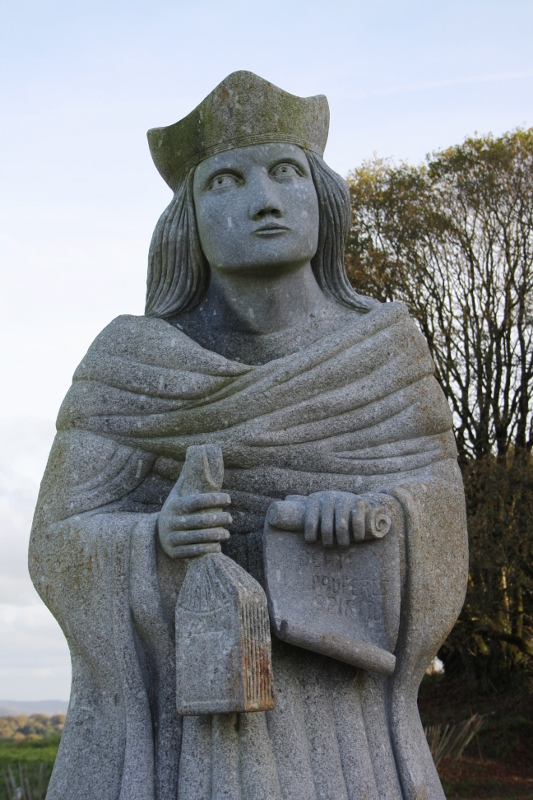
Also, the concept of 'saintliness' has changed.
In the early days of the church sanctus meant to be consecrated by rite and those who had been baptised were 'saints'. In the 4th century onwards Christianity had taken root and the title 'saint' was reserved for the clergy (especially monks) and normally it was honorific. This use of the title 'saint' (which had disappeared elsewhere) was imported into Brittany by migrating Britons and continued until the 7th century.
Comments
Post a Comment